

Wellness in the Details: Why Lumbar Pillow Inserts Matter for Health
Wellness in the Details: Why Lumbar Pillow Inserts Matter for Health
When we think about physical wellness, our minds naturally turn to deliberate habits: daily exercise, nutritious meals, mindful hydration, and restorative sleep routines. Yet, we often overlook an environment where our bodies spend hours each day—our seated spaces. Between working at a desk, commuting, gathering around the dining table, and unwinding on the sofa in the evening, modern life requires an extraordinary amount of sedentary posture. At Looms & Linens, we believe true luxury is rooted in the fine details of living well. A refined room is only as successful as its ability to nurture the human frame, and our handcrafted lumbar pillow inserts are engineered to unite high-end textile aesthetics with musculoskeletal health.
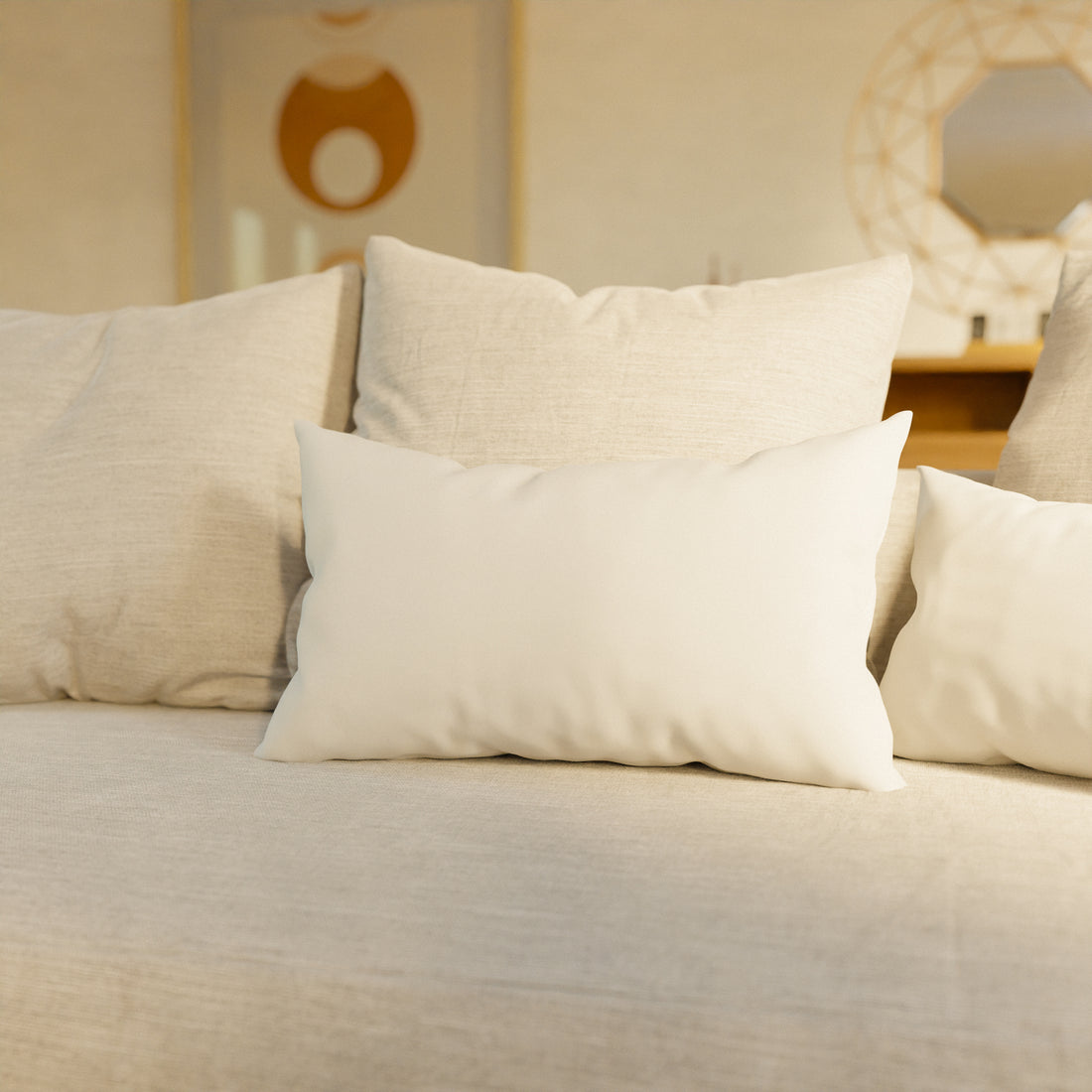
A lumbar cushion is far more than a chic geometric accent for a designer sofa or master bed. When calibrated with precise dimensions and filled with high-resilience, breathable materials, an elongated lumbar pillow serves as a vital orthopedic tool that counteracts spinal fatigue, preserves natural alignment, and relieves joint tension. In this comprehensive guide, we will explore the biomechanics of sitting, review our versatile 16-size catalog across three height profiles, and examine how our three signature fills—Down Alternative, Organic Cotton, and Natural Kapok—can be customized to support your daily wellness journey.
The Biomechanics of Seated Posture: Protecting the Lumbar Curve
The human spine is naturally engineered in an elegant "S" curve. The inward curve of the lower back, known as the lumbar lordosis, functions as the body's natural shock absorber. It distributes the downward gravitational load of the head, shoulders, and torso evenly across the sacrum and pelvic bowl.
When you sit on conventional chairs or deep residential sofas without lower back support, gravity steadily pulls the upper body downward. In response, the pelvis tilts backward (a posterior pelvic tilt), flattening the natural lordotic curve. This shift triggers a cascade of physiological tension throughout the body.
The Consequences of an Unsupported Lumbar Curve:
-
Intervertebral Disc Compression: Flattening the lower back forces the lumbar discs—particularly at the L4-L5 and L5-S1 junctions—to compress unevenly, accelerating wear and increasing the risk of nerve impingement, such as sciatica.
-
Chronic Muscular Strain: The paraspinal and erector spinae muscles remain under continuous isometric contraction to prevent the torso from collapsing forward, leading to muscle stiffness, spasms, and end-of-day fatigue.
-
Diaphragmatic and Digestive Compression: A rounded lumbar spine naturally causes the thoracic cage to drop forward, compressing internal organs and limiting full diaphragmatic breath expansion.
-
Reduced Lower-Limb Circulation: Slumping pinches neurovascular pathways around the hips and thighs, contributing to sluggish circulation and restless sensations in the legs.
The Restorative Role of a Precision Lumbar Insert
A premium lumbar insert acts as a supportive bridge between your anatomy and your furniture. By gently filling the negative space behind the lower back, it encourages the spine to maintain its natural inward arch without conscious muscular effort.
| Health & Ergonomic Benefit | Physiological Mechanism | Daily Lifestyle Outcome |
| Spinal Neutrality | Fills anatomical lordotic gap | Prevents muscle strain and back fatigue during long sitting sessions. |
| Disc Decompression | Distributes upper-body weight across the pelvis | Relieves pressure on lumbar discs and cushions the sciatic nerve. |
| Thoracic Alignment | Stabilizes the lumbar base to open the chest | Promotes deeper diaphragmatic breathing and sustained mental focus. |
| Pelvic Stability | Prevents backward pelvic tilt | Reduces hip flexor tightness and improves lower-body circulation. |