
The Atelier Standards: 5 Benchmarks of Pillow Craftsmanship Master Upholsterers Look For
The Atelier Standards: 5 Benchmarks of Pillow Craftsmanship Master Upholsterers Look For
To the untrained eye, two white pillow forms resting side by side in a workroom appear interchangeable. Both are enclosed in white casings; both feel momentarily soft to the touch. Yet to a master upholsterer or high-end bespoke interior designer, one represents an heirloom architectural anchor, while the other is an unstable core destined to collapse within weeks.
True luxury soft furnishings rely on structural integrity engineered from the inside out. In bespoke ateliers, cushions are evaluated with the same exacting scrutiny applied to fine millwork or hand-tailored suiting. Sourcing pieces that maintain their sculptural drape, edge geometry, and tactile loft requires moving past generic marketing claims and inspecting the hidden benchmarks of fabrication. Here are 5 trade benchmarks master craftspeople demand from a professional-grade pillow insert.
1. High-Density Calibrated Fill Weight Over Raw Loft
The most deceptive quality of inferior pillow inserts is artificial puffiness. Mass-market manufacturers achieve a tall initial profile by blowing loose, low-density polyester or aerated down into a casing. The moment weight is applied, the air escapes, and the pillow bottoms out into an unsupportive plane.
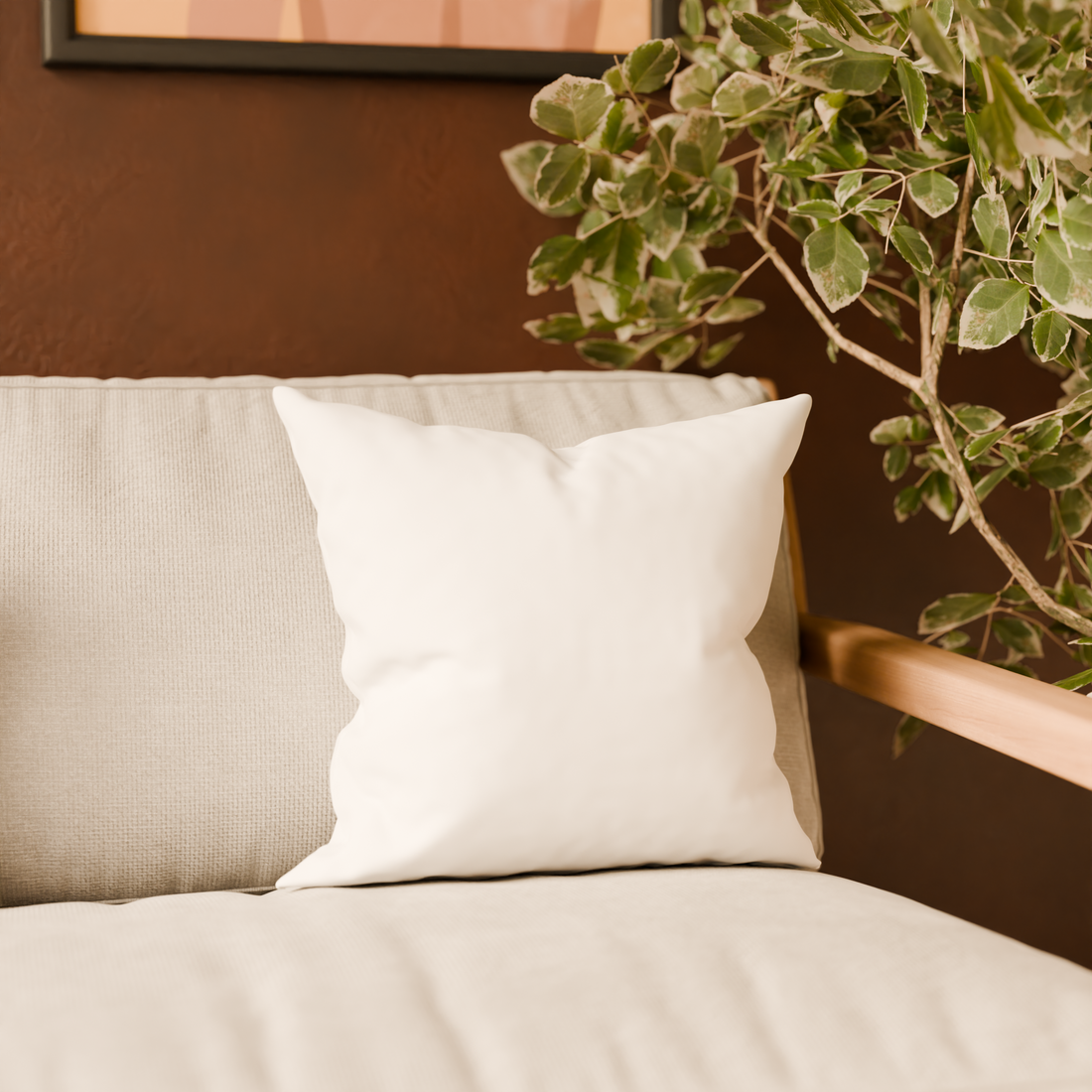
Bespoke ateliers never judge an insert by height alone; they evaluate mass density by weight. A professional 22x22-inch insert must contain calibrated fill ounces to create internal counter-pressure. This density forces the fill outward against the perimeter seams, establishing the tensile strength necessary to support heavy upholstery fabrics like Belgian linen, mohair, and cut velvet without bowing under their drape.
2. Down-Proof, High-Thread-Count Natural Ticking
A frequent craft failure in decorative pillows is fiber migration: down quills poking through the weave, or fine synthetic microfibers "bearding" through exterior covers as unsightly white fuzz.
Master craftspeople insist on 100% natural cotton ticking woven with an ultra-dense, down-proof percale or twill weave (minimum 230 to 300 thread count). High-density weaving acts as a physical barrier that traps natural feathers and micro-filaments entirely within the core. Simultaneously, using breathable, unbleached cotton rather than synthetic non-woven polypropylene liners ensures continuous air circulation, allowing the insert to compress smoothly and rebound instantly without making crinkling noises.
3. Overlocked Safety Seams and Perimeter Reinforcement
The pressure exerted on a cushion core during insertion, styling, and daily use is concentrated almost entirely on the seams. When a designer forces a 22-inch insert into a 20-inch decorative cover to achieve a taut, plump aesthetic, standard straight-stitch seams often rupture.
In professional workrooms, inserts must feature industrial safety overlocking or double-needle chain stitching along every perimeter seam. Overlocking encases raw fabric edges in interlocking thread loops, preventing interior fraying and ensuring that vigorous "karate chops" and compressed cover changes never compromise seam integrity.
4. Baffle-Wall Calibration and Chambered Symmetry
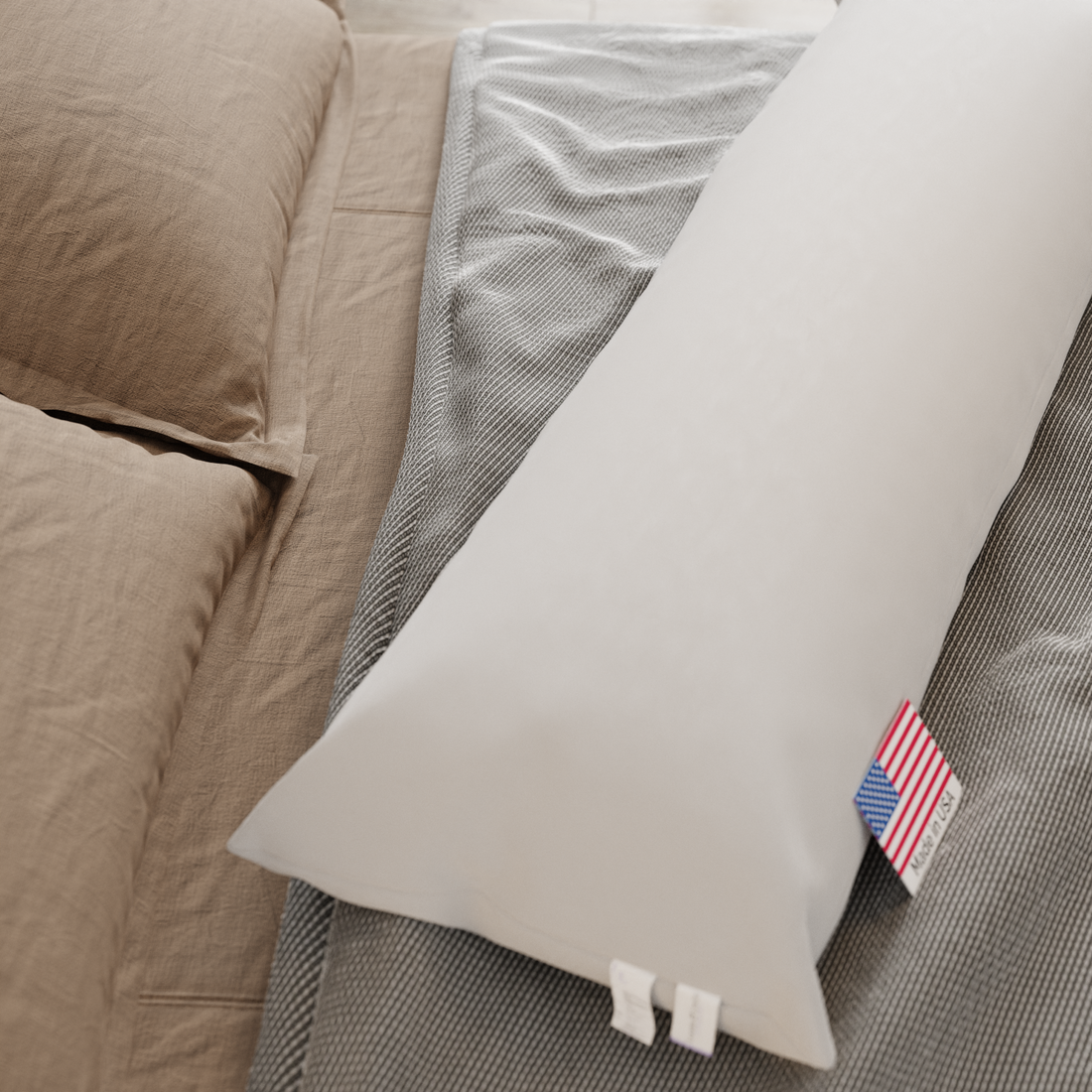
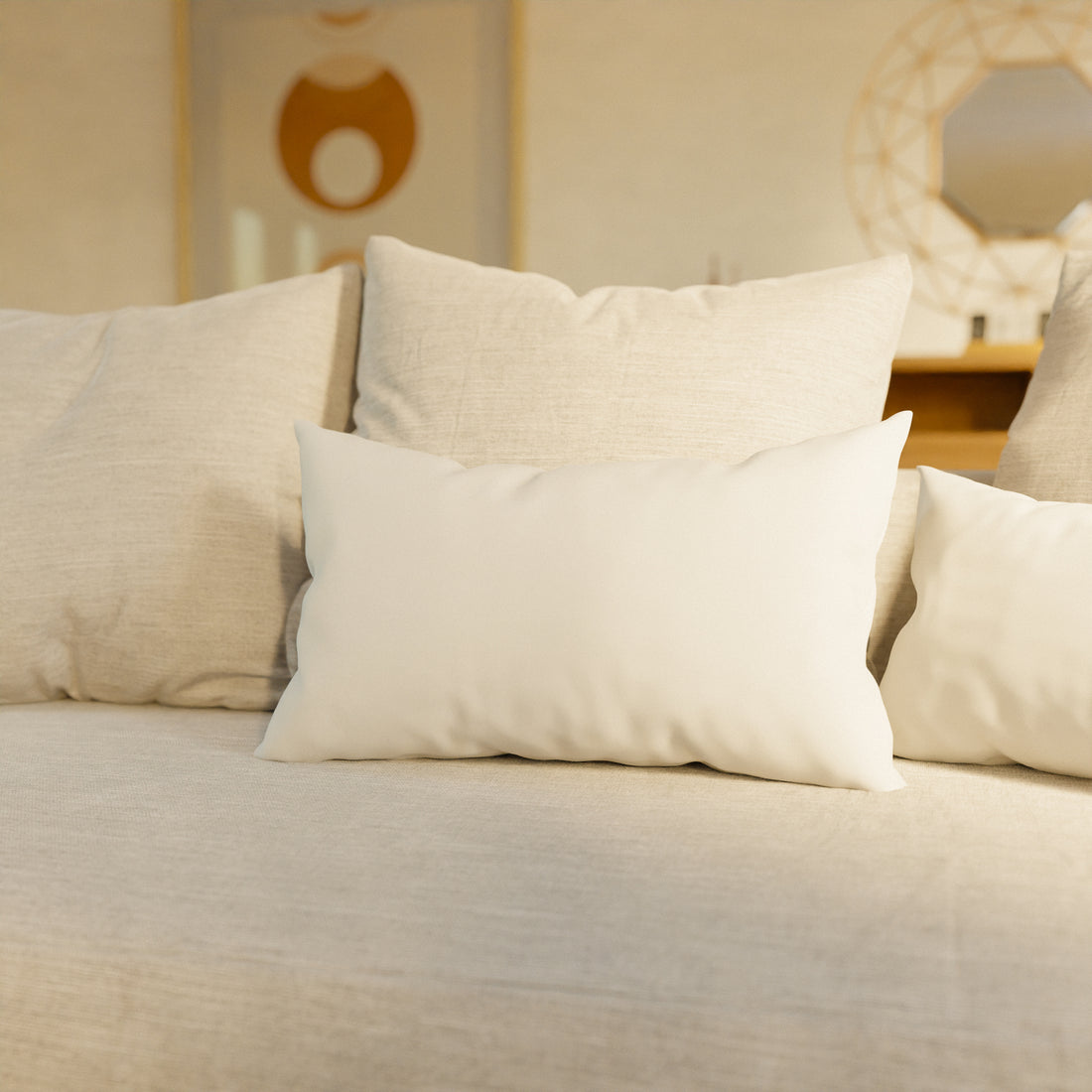
Larger decorative forms—such as 26x26-inch European shams, daybed bolsters, and elongated lumbars—are inherently vulnerable to internal fill displacement. Gravity pulls loose fill toward the bottom edge, leaving the top corners hollow and deflated.
Atelier-grade craftsmanship prevents this through internal chambering and baffle-box construction. By securing internal fabric dividers or channeling the core fill into balanced compartments, the fill is mechanically restricted from shifting. This structural symmetry ensures that vertical pillows stand proud against a headboard or sofa back, maintaining crisp, uniform volume across all four corners.
5. Fiber Homogeneity and Mechanical Cleansing
The resilience of a pillow core depends on the purity and uniformity of its internal fibers. In natural feather, down, or organic botanical kapok fills, residual debris, broken quills, or uncombed fibers cause uneven clumping and premature compaction.
Workroom standards demand multi-stage mechanical sorting and hyper-cleansing. Feather and down plumage must be washed, rinsed, and de-dusted to remove brittle shafts and bio-impurities, leaving only flexible, high-loft clusters. For clean synthetics, filaments must be uniform micro-denier strands rather than coarse chopped scrap, ensuring fluid, cloud-like movement that mimics natural plumage while providing permanent hypoallergenic springback.
The Looms & Linens Difference
At Looms & Linens, our inserts are built to satisfy the exacting specifications of master workrooms and luxury residential designers. We reject shortcuts, manufacturing our pillow forms in the USA using uncompromising bench-crafted standards.
Every Looms & Linens insert—whether filled with our hypoallergenic micro-denier Down-Alternative, GOTS-Certified Organic Kapok, or hyper-cleansed natural Feather blends—is overfilled to precise weight calibrations and encased in 100% down-proof, high-thread-count unbleached cotton. Built with reinforced perimeter stitching and shift-resistant internal distribution, our cores provide the enduring structural memory, tactile luxury, and tailored poise that transform soft furnishings into enduring works of art.
Conclusion
True sophistication in interior design is rooted in the unseen discipline of craftsmanship. By demanding professional-grade fill density, down-proof natural ticking, and reinforced seam engineering, you protect your textile investments and bring the timeless structural standard of the bespoke atelier into your home.