

The Hospitality Protocol: 5 Maintenance Failures Ruining Your Bedding (And the Hotel Standards That Fix Them)
The Hospitality Protocol: 5 Maintenance Failures Ruining Your Bedding (And the Hotel Standards That Fix Them)
Few domestic experiences are as quietly frustrating as watching high-end bedding deteriorate long before its time. You invest in premium long-staple cotton sheets, pure linen covers, and quality pillow forms, only to find them within months looking yellowed, lumpy, limp, and structurally depleted. In five-star hospitality, bedding is subjected to continuous daily laundering and relentless guest turnover, yet it consistently emerges cloud-soft, immaculate, and architecturally plump.
The secret is not industrial magic—it is an adherence to strict textile maintenance protocols. When domestic care relies on standard consumer habits, it inadvertently breaks down natural fibers and collapses internal fills. Here are 5 common bedding maintenance failures and the rigorous hotel standards that permanently solve them.
1. The Detergent Residue Trap (The Cause of Stiffness and Fiber Brittleness)
The most common mistake in home linen care is overusing commercial liquid detergents and synthetic fabric softeners. Softeners coat natural cotton and linen fibers with a water-repellent silicone film, suffocating the weave, trapping body oils, and turning once-crisp sheets gummy and scratchy.
-
The Problem: Excess soap fails to rinse out in standard domestic wash cycles, creating chemical buildup that stiffens fabric and attracts surface grime.
-
The Hotel Protocol: Modern luxury hoteliers practice "acidic neutralisation." Wash linens using half the recommended amount of mild, enzyme-based liquid detergent. In place of synthetic softeners, add a half-cup of distilled white vinegar to the rinse cycle. The mild acetic acid strips away alkaline detergent residue, opens natural fiber pores, and restores tactile softness without compromising fiber integrity.
2. The Clumping Collapse: Reviving Compressed Pillow Cores
A flat, lumpy pillow insert is the fastest way to ruin a bed's aesthetic and ergonomic support. When moisture, ambient humidity, and natural oils penetrate pillow tickings, internal down clusters or micro-denier fibers tangle and compress, forming dense, unyielding knots.
-
The Problem: Shaking or punching the pillow from the outside fails to break apart internal fiber binds.
-
The Hotel Protocol: Implement the low-heat mechanical expansion protocol. Place two pillow inserts in a commercial-capacity dryer on the lowest heat or air-fluff setting alongside three solid wool dryer balls (or clean, uncolored tennis balls). Run for 30 to 40 minutes. The continuous physical percussion separates bonded fiber filaments while warm airflow redistributes internal loft uniformly across all four corners.
3. Thermal Shock and Fiber Shrinkage
Linen and high-thread-count cotton shams often emerge from the dryer misshapen, puckered along the zipper tracks, and noticeably shrunken. This occurs because consumer dryers bake wet fabrics at excessively high temperatures, causing thermal shock that permanently snaps delicate cellulosic yarn.
-
The Problem: High drying heat degrades natural textile memory and warps seam bindings.
-
The Hotel Protocol: The "85% Moisture Extraction" rule. Luxury laundries never bake soft furnishings to bone-dry completion. Tumble dry on delicate, medium-low heat until the fabric is approximately 85% dry. Remove immediately while slightly damp, hand-smooth the perimeter seams, and drape flat across a drying rack or directly onto the mattress to air-finish. This eliminates harsh wrinkles naturally and preserves the exact geometric dimensions of the casing.
4. Biological Oxidation: Curing Core Yellowing and Staining
Pillow cores and mattress toppers inevitably develop yellow halos over time due to sweat, sebum, and moisture oxidation. Most homeowners react by applying chlorine bleach, which aggressively weakens cotton fibers, accelerates yellowing, and degrades down-alternative clusters.
-
The Problem: Chlorine bleach reacts with biological proteins, setting yellow stains rather than lifting them.
-
The Hotel Protocol: Oxygenation and enzymatic restoration. Treat yellowing cores by soaking them in warm water infused with sodium percarbonate (oxygen bleach) and a pure citrus-enzyme cleaner for two hours prior to washing. Oxygen bleach lifts oxidized lipid bonds without eroding delicate ticking shells or synthetic micro-fibers, restoring pristine optical brightness.
5. Inadequate Fill Weight Density (The Slouching Sham Syndrome)
Even meticulously cleaned European shams and decorative cushions look neglected if they fold over themselves or sag away from the headboard. In luxury hotels, every pillow stands rigidly upright, creating a grand, structured silhouette.
-
The Problem: Sourcing inserts with insufficient fill weight allows the cushion to collapse under the sheer weight of its own exterior fabric.
-
The Hotel Protocol: The calibrated high-density overfill standard. Hospitality staging teams never deploy inserts matched 1:1 with sham dimensions. They enforce a mandatory +20% fill weight density or upsize the insert core by two inches (e.g., placing a 28x28 insert into a 26x26 Euro sham). This structural pressure completely fills the sham's perimeter flange, eliminating hollow edges and maintaining an upright, architectural posture throughout the stay.
The Looms & Linens Difference
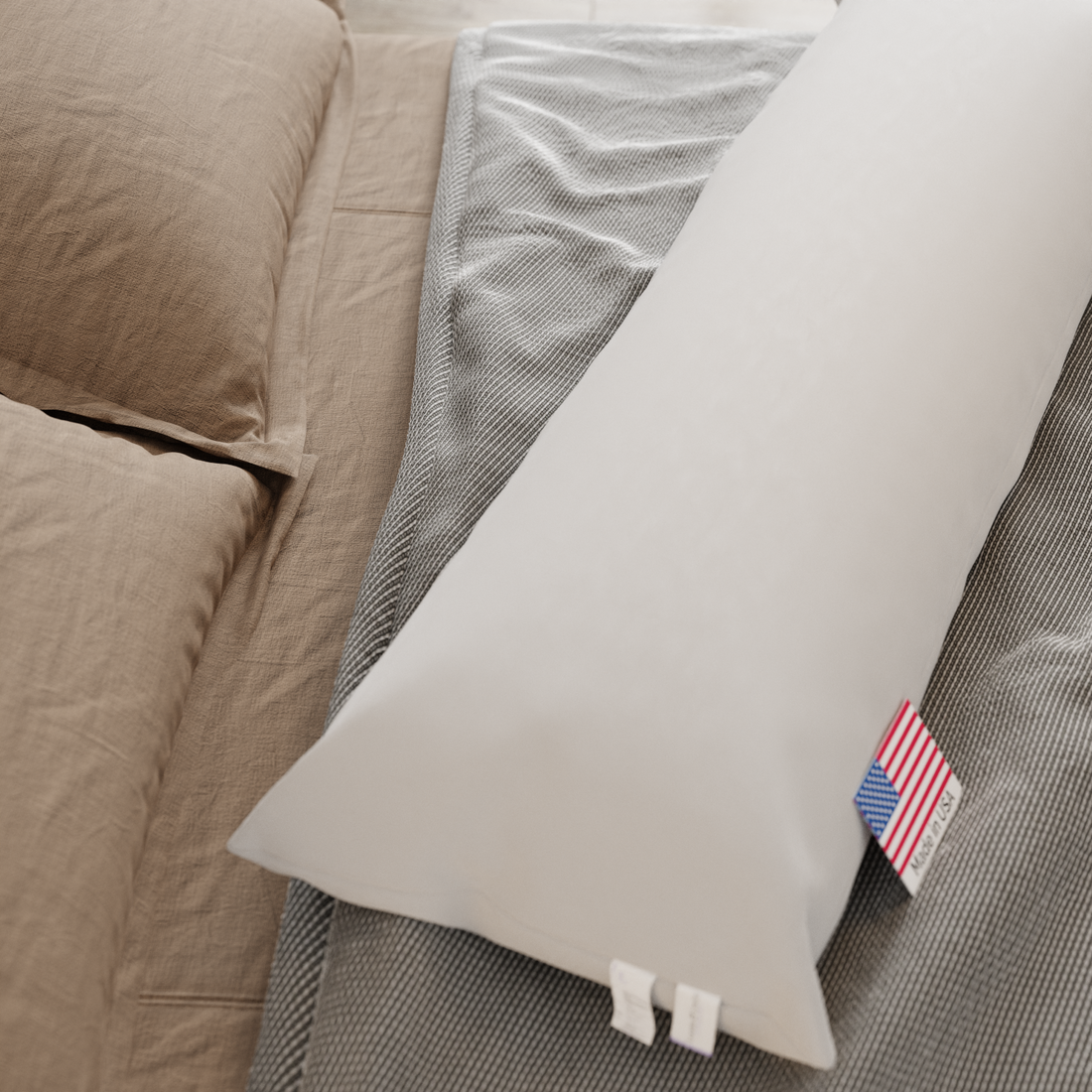
Hotel-grade bedding longevity is only possible when the underlying foundation is built to institutional standards. At Looms & Linens, our high-density pillow inserts are engineered to endure rigorous hospitality care while maintaining editorial poise.
Crafted with high-thread-count, migration-proof 100% cotton shells, our Down-Alternative, GOTS-Certified Organic Kapok, and Feather blends are overfilled with resilient, high-loft fibers that resist clumping and thermal compaction. Washable, breathable, and manufactured with American precision, Looms & Linens inserts provide the lasting density required to keep your bedroom suite looking tailored, pristine, and five-star ready season after season.
Conclusion
Preserving the luxury of your soft furnishings is a discipline of mindful maintenance rather than frequent replacement. By replacing destructive domestic habits with proven hospitality protocols, you protect your textile investments, ensure pure sleep hygiene, and maintain an effortless, five-star bedroom sanctuary every day of the year.